
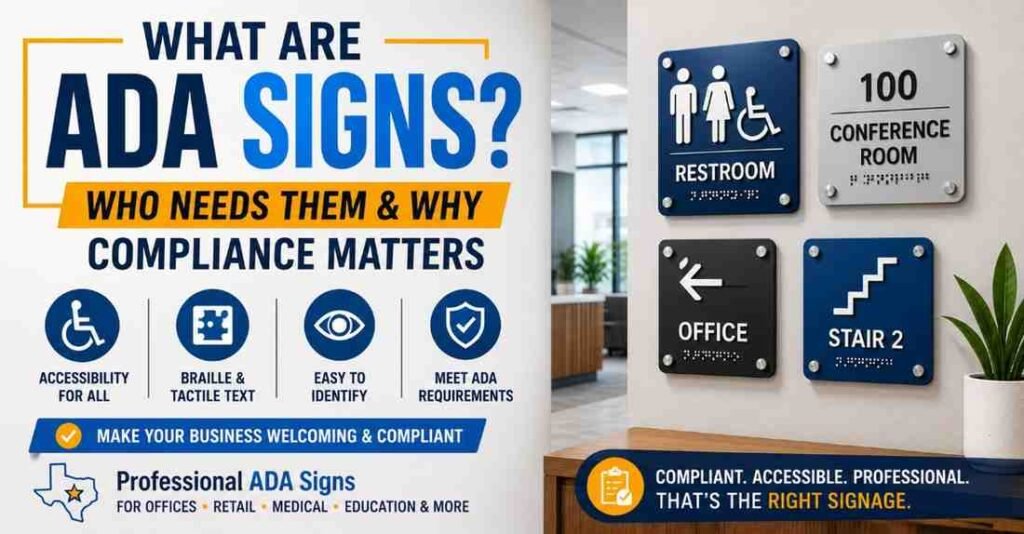
What Are ADA Signs and Who Needs Them?
If you’re opening a new business, renovating a commercial property, or updating your interior signage, you’ve likely come across the term ADA signs. Many business owners know they’re important, but often ask: What are ADA signs, and who is required to have them? The answer is simple: ADA signs help make buildings accessible to everyone, including individuals with visual impairments and disabilities. In many commercial buildings, ADA-compliant signage is not just recommended—it’s legally required. In this guide, we’ll explain what ADA signs are, where they’re used, who needs them, and why they play a critical role in creating accessible and professional business environments. What Are ADA Signs? ADA signs are signs designed to comply with the Americans with Disabilities Act (ADA), a federal law that promotes accessibility and equal access for individuals with disabilities. These signs include specific features that make information easier to read and understand for people with visual impairments. Common ADA sign features include: ADA signs help ensure that all visitors can navigate a building safely and independently. Why Are ADA Signs Important? Accessibility isn’t just about meeting regulations—it’s about creating a welcoming environment for everyone. ADA signage helps: For businesses, ADA signs demonstrate professionalism, inclusivity, and a commitment to serving all customers. What Does ADA Stand For? ADA stands for the Americans with Disabilities Act, enacted in 1990. The law was designed to prevent discrimination against individuals with disabilities and establish accessibility standards for public spaces, workplaces, and commercial facilities. ADA signage is one of the many requirements that help make buildings accessible. Who Needs ADA Signs? Most commercial properties that serve employees, customers, patients, students, or visitors need ADA-compliant signage. Businesses That Typically Need ADA Signs If your building contains permanent rooms or spaces used by the public or employees, ADA signage is often required. Where Are ADA Signs Required? ADA signs are generally required for permanent rooms and spaces. Common Locations Include: Key Features of ADA-Compliant Signs To meet ADA requirements, signs must follow specific guidelines. Examples include: Non-Glare Finish: Reflective surfaces can make signs difficult to read. ADA signs typically use matte or low-glare finishes. Proper Font Selection Fonts should be: Correct Mounting Height: ADA signs must be installed at specific heights and locations for accessibility. Types of ADA Signs Room Identification Signs Used for: These are among the most common ADA signs. Restroom Signs Typically include: Directional Signs Help visitors locate: Exit Signs Used to identify accessible exits and evacuation routes. Stairwell Signs Provide floor information and emergency navigation guidance. Common ADA Sign Mistakes Businesses Make Many businesses unknowingly violate ADA requirements. Working with experienced sign professionals helps avoid these mistakes. ADA Signs vs Standard Signs Many business owners wonder why standard signs aren’t enough. Standard Signs ADA Signs Both can be visually attractive, but ADA signs are specifically engineered to meet accessibility standards. ADA Signs and Office Environments Modern office spaces commonly require ADA signage throughout the building. Examples include: ADA signage works alongside professional office branding to create a welcoming and compliant workplace. Explore our custom Office Signs solutions. ADA Signs for Interior Spaces Interior signs often combine branding with accessibility. Businesses frequently integrate ADA requirements into: This creates a cohesive appearance while maintaining compliance. Learn more about our Interior Signs solutions. ADA Signs and Reception Areas Visitors often interact with ADA signage immediately upon entering a facility. Reception areas may include: Professional ADA signage helps improve visitor experiences from the moment they arrive. Discover our custom Reception Signs solutions. Can ADA Signs Be Customized? Absolutely. Modern ADA signs can be customized to match your branding while still meeting compliance requirements. Customization options include: Many businesses choose ADA signs that complement their overall interior design and branding strategy. View our Custom Signs solutions for fully customized ADA-compliant signage. ADA Sign Requirements by Industry Benefits of ADA Signs Beyond Compliance ADA signs provide advantages beyond simply meeting legal requirements. Why Choose Signage Texas? At Signage Texas, we design and manufacture ADA-compliant signage solutions for businesses throughout Texas. Our services include: We help businesses create signage that is both compliant and visually appealing. Get ADA-Compliant Signage for Your Business Whether you’re opening a new location or upgrading an existing facility, ADA signage is an important part of creating an accessible environment. Our team can help you select, design, and install ADA-compliant signs that meet regulations and align with your brand. 👉 Contact Signage Texas today. Frequently Asked Questions What are ADA signs? ADA signs are signs designed to comply with accessibility requirements established by the Americans with Disabilities Act. Are ADA signs required in offices? Yes. Many offices require ADA-compliant room identification, restroom, and directional signage. Do ADA signs need Braille? In many cases, yes. Permanent room identification signs typically require Grade 2 Braille. Can ADA signs match my branding? Absolutely. ADA signs can be customized while still maintaining compliance. What happens if my business doesn’t have ADA signs? Failure to comply with ADA requirements can create accessibility issues and may expose businesses to legal risks.
What Are ADA Signs and Who Needs Them? Read More »